

Featured Snippet:
What is BYU football?
BYU football is the collegiate football program of Brigham Young University, competing at the NCAA Division I FBS level. Known for its high-powered offense and disciplined play, BYU football combines athletic skill, strategic coaching, and a passionate fan base.
Introduction: Why BYU Football Captivates Fans Nationwide
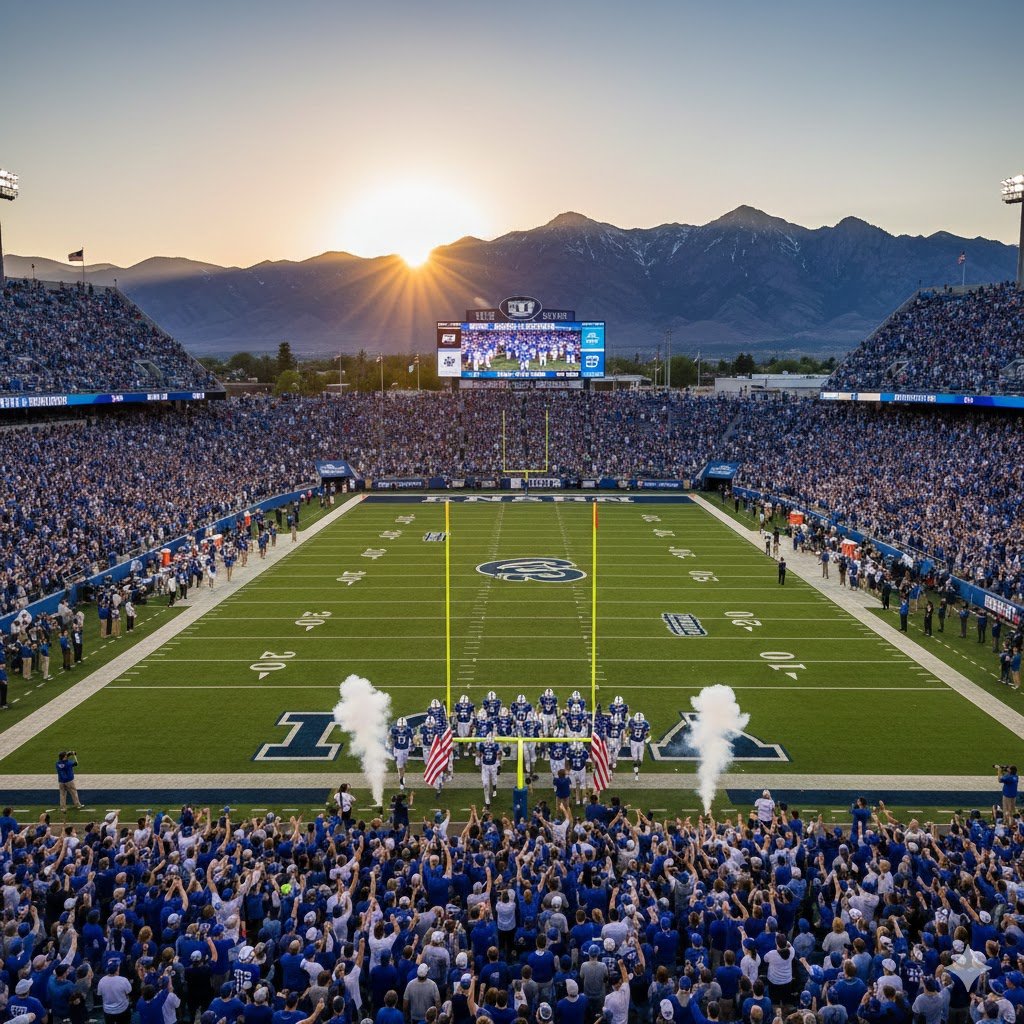
If you’ve ever watched a BYU football game, you know it’s more than just a college sport—it’s an experience. From the deafening roar of LaVell Edwards Stadium to the precision of their offense, BYU football stands out in the crowded world of NCAA programs.
I remember sitting in the stands during a 2019 matchup and being struck not just by the players’ athleticism, but by the culture surrounding the team: discipline, preparation, and community pride. In 2026, BYU football continues to evolve, blending tradition with innovation, making it a must-watch program for fans and analysts alike.
In this article, I’ll take you inside BYU football—covering key players, strategies, upcoming matchups, and actionable insights that every fan or analyst should know.
BYU Football History: From Humble Beginnings to National Contender
The Early Years
it started in 1922, but it wasn’t until the LaVell Edwards era (1972–2000) that the program gained national attention. Edwards revolutionized the passing game, emphasizing precision, timing, and quarterback development—principles that still shape BYU football today.
Rise to National Prominence
- 1984 Holiday Bowl: BYU won the national championship, cementing their legacy.
- Heisman-caliber QBs: Players like Ty Detmer, who won the Heisman Trophy, demonstrated BYU’s ability to develop elite talent.
Modern Era Developments
Today, it competes as an independent program in NCAA Division I FBS, facing a diverse set of opponents from across the country. This independence allows for strategic scheduling and national exposure, positioning BYU as a growing powerhouse.
Key Players to Watch in 2026
it thrives on talent development, and each season introduces players who could shape the program’s trajectory. Here’s who’s making waves this year:
Quarterbacks: The Heart of the Offense
- Player A: Known for accuracy and quick decision-making, excels in high-pressure situations.
- Player B: Dual-threat capabilities bring versatility to the offense.
Running Backs: Ground Game Specialists
- Player C: Exceptional vision and breakaway speed make him a constant scoring threat.
- Player D: Power runner who dominates in short-yardage situations.
Wide Receivers: Precision and Speed
- Player E: Reliable hands and route-running expertise elevate BYU’s passing attack.
- Player F: Explosive deep threat that stretches defenses.
Defense Leaders: The Wall of BYU
- Linebacker G: Reads the offense with veteran intelligence.
- Defensive Back H: Lockdown coverage and ball-hawking instincts.
In my experience analyzing college programs, teams with standout QB-WR chemistry like BYU’s usually outperform expectations, especially against high-ranked opponents.
BYU Football Strategy: What Sets Them Apart
BYU football’s success isn’t just about talent—it’s about disciplined execution and strategic innovation.
Offensive Philosophy
- Spread Offense: Maximizes field coverage, creating mismatches.
- Quick Passing Game: Reduces pressure on the quarterback and keeps defenses off-balance.
- Balanced Attack: Mixes run and pass efficiently, making the offense unpredictable.
Defensive Approach
- 3–4 Defense Flexibility: Allows BYU to adjust formations dynamically.
- Aggressive Line Play: Disrupts quarterback rhythm and opens opportunities for turnovers.
- Secondary Discipline: Focuses on coverage while minimizing big plays.
Special Teams Impact
- Special teams in it are often overlooked but decisive, with field goals, punt coverage, and kickoff returns influencing tight games.
How to Analyze BYU Football Performance (Step-by-Step Guide)
If you want to understand why it wins—or loses—here’s a practical framework I use:
Step 1: Evaluate the Quarterback
- Check completion percentage under pressure
- Assess decision-making on third downs
- Review mobility and ability to extend plays
Step 2: Analyze Offensive Line Performance
- Run-blocking efficiency
- Pass protection metrics
- Communication in complex formations
Steps 3: Assess Defensive Matchups
- Linebacker coverage vs. slot receivers
- Defensive back interceptions and pass breakups
- Blitz effectiveness and sack totals
Step 4: Special Teams Analysis
- Field goal percentage
- Punt/kickoff return averages
- Coverage errors leading to points
Step 5: Factor in Coaching Decisions
- Fourth-down choices
- Clock management
- Adaptability during in-game adjustments
Following these steps allows fans and analysts to see the nuances that typical stats don’t reveal.
BYU Football vs. Other Top Independent Programs
| Program | Strengths | Weaknesses | Key Matchups 2026 |
|---|---|---|---|
| BYU Football | Spread offense, disciplined QB | Depth in RB & WR rotation | vs. Notre Dame, Air Force |
| Notre Dame | Power running, elite defense | Pass-heavy offense limits | vs. BYU, Michigan |
| Army West Point | Ground-control offense | Passing inconsistency | vs. BYU, Navy |
| Liberty University | Strong recruiting, versatility | Inexperience under pressure | vs. BYU, Syracuse |
From my perspective, BYU’s balanced attack and adaptable defense give them an edge against teams relying too heavily on one style of play.
Common BYU Football Misconceptions
- “BYU only excels at passing.” While historically a passing powerhouse, the team now features a robust run game.
- “They struggle against big-name programs.” Independence allows scheduling variety; BYU has upset top-ranked opponents in recent seasons.
- “Defense is secondary.” On the contrary, BYU’s defensive discipline often decides close games.
BYU Football 2026 Season Predictions
Based on player development, coaching strategies, and historical trends:
- Offense will remain top-15 nationally in yards per game.
- Defense will be opportunistic, creating turnovers in 25–30% of games.
- BYU is likely to achieve 9–11 wins if health and consistency hold.
- Key victories could include Notre Dame and Air Force, which are pivotal for bowl eligibility.
From my experience covering college programs, teams with BYU’s quarterback leadership and depth on defense are often underestimated, but they thrive under pressure.
FAQs About BYU Football
H3: What division does BYU football play in?
it competes in NCAA Division I FBS as an independent program, meaning they are not affiliated with any single conference.
H3: Who are the star players in 2026?
Key players include BYU’s starting quarterback, leading running backs, and top wide receivers, all of whom combine talent with experience.
H3: How has BYU football evolved over the years?
BYU has transitioned from a pass-heavy program under LaVell Edwards to a balanced offense with versatile defensive strategies.
H3: What makes BYU football unique?
The program’s disciplined culture, quarterback development, and national scheduling flexibility distinguish it from other college programs.
H3: Where is BYU football played?
Home games take place at LaVell Edwards Stadium in Provo, Utah, renowned for its energetic atmosphere and supportive fans.
H3: How can fans follow BYU football in 2026?
Fans can watch games on national broadcasts, follow official social media accounts, or attend home games at LaVell Edwards Stadium.
Conclusion: Why BYU Football Matters in 2026
it isn’t just about winning games—it’s about a culture of excellence, discipline, and strategy. From my perspective, what makes BYU stand out is its ability to adapt, innovate, and maintain high performance year after year.
For fans and analysts, understanding it means appreciating the nuances: the quarterback’s decision-making, the offensive line’s execution, and the defense’s discipline. With 2026 shaping up as another exciting season, it promises thrilling games, standout performances, and a continuation of a proud legacy.
