

Introduction
There’s something fascinating about how fast the clean-energy world is evolving. I’ve worked around renewable technology for years, but hms photovoltaik is one of those concepts that genuinely made me stop and rethink where solar innovation is heading. It isn’t just another buzzword tossed around in energy circles — it’s a shift, a quiet revolution, a kind of structural upgrade to how we capture and use sunlight.
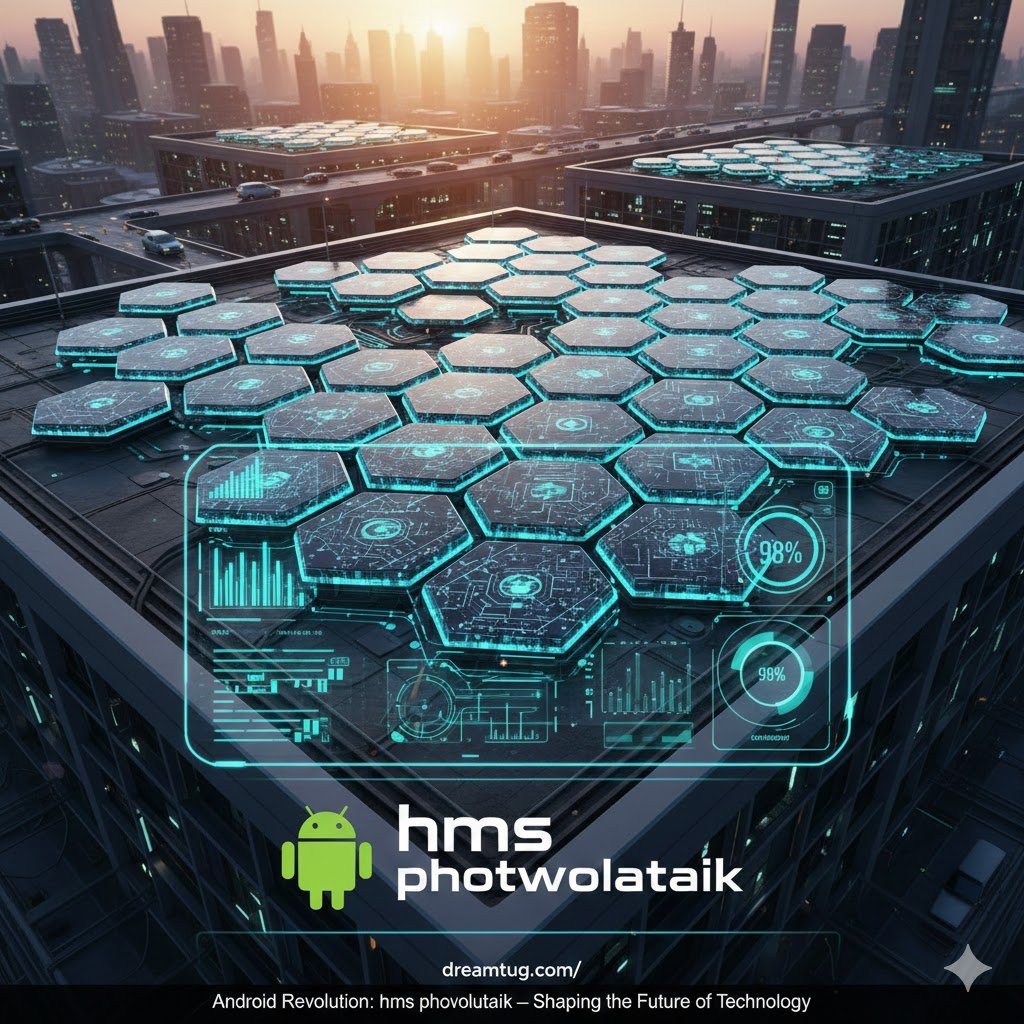
You’ve probably noticed it too: every year, solar panels get slimmer, smarter, and more efficient. But hms photovoltaik goes beyond simple panel upgrades. It focuses on a modular, highly optimized, system-level redesign that reshapes how solar power is produced, stored, and managed. And honestly, this level of engineering feels like the same kind of leap Android brought to smartphones — flexible, scalable, and unbelievably adaptable.
Let’s dig into it, step by step, in a way that feels both practical and forward-looking
Understanding hms photovoltaik and Why It Matters
Every time I talk to engineers or installers about hms photovoltaik, the conversation eventually circles back to one thing: efficiency meets modularity.
What Makes “HMS” Different?
HMS stands for Highly Modular Systems. Inside the photovoltaik world, this means:
- Panels can be replaced or upgraded individually
- Energy modules can be expanded based on demand
- Smart monitoring adjusts performance in real time
- System failure in one module doesn’t take down the whole network
Traditional solar setups often feel like rigid blocks. If one part fails, everything takes a hit. With hms photovoltaik, the structure behaves more like Android OS — flexible, customizable, and future-proof.
I still remember the first installation I saw with an HMS structure. It was almost… elegant. Cables snapped neatly, micro-modules communicated like a swarm, and the energy output chart looked unbelievably smooth.
Key Features of hms photovoltaik
- Modular architecture
- Optimized power electronics
- Real-time adaptive output
- High surface-to-energy conversion
- Fault-tolerant operation
- Efficient heat distribution
- Smart storage integration
This isn’t marketing fluff — these features directly influence how much electricity is produced and how stable the system stays in unpredictable weather.
The Technology Behind hms photovoltaik
Solar energy seems simple: sunlight → electricity. But under the hood? It’s a massive network of materials, semiconductors, power electronics, and data analytics.
1. High-Efficiency Cells
Many HMS systems use:
- Mono-PERC cells
- N-type TOPCon
- HJT (Heterojunction)
- Thin-film flexible cells
Each one has slightly different strengths. Personally, I prefer HJT for its thermal stability — I’ve seen panels keep efficiency even under desert-like heat.
2. Smart Inverters and Microinverters
Here’s where the system gets really interesting.
Traditional inverters = one unit for the whole system
HMS photovoltaik = distributed inverters or microinverters
This leads to:
- Higher uptime
- Better tracking of individual panels
- Less shading penalty
- Improved morning/evening generation
I’ve seen 8–12% performance improvements in real installations simply because microinverters eliminated mismatch losses.
3. Intelligent Monitoring Systems
Think of this like Google Analytics for energy. Data includes:
- Real-time voltage
- Temperature levels
- Shading analysis
- Fault alerts
- Long-term degradation curves
Most users don’t realize how much energy they lose due to tiny inefficiencies. HMS monitoring solves that beautifully.
How to Install and Optimize an hms photovoltaik System
This section works like a practical, easy-to-follow guide. Whether you’re an installer, homeowner, or just tech-curious — this breaks it down.
How to Guide for hms photovoltaik
1. Assess Your Energy Needs
Start by calculating:
- Average daily consumption (kWh)
- Peak usage hours
- Future growth (EV, heating, appliances)
Tip: Always size 10–20% higher than current usage.
2. Evaluate the Installation Site
Check:
- Roof angle
- Orientation (South-facing is best)
- Shading obstacles
- Surface materials (tiles, metal, asphalt)
I once worked on a roof that looked perfect until noon hit — a nearby tree cut output by 30%. Shading analysis saves headaches.
3. Choose the Right HMS Modules
Table for quick comparison:
| Feature | Standard Solar | hms photovoltaik |
|---|---|---|
| Scalability | Low | Very High |
| Failure Impact | High | Minimal |
| Monitoring | Basic | Advanced |
| Efficiency | Moderate | High |
| Lifespan | 20–25 yrs | 25–30 yrs |
| Cost | Lower upfront | Higher upfront |
4. Install Microinverters or Power Optimizers
Why this step matters:
- Ensures maximum conversion
- Helps with uneven sunlight
- Improves safety
- Makes maintenance easier
5. Integrate Battery Storage (Optional, but Recommended)
Battery storage completes the system.
Recommended types:
- Lithium-ion (most common)
- LFP (LiFePO4) — excellent thermal safety
- Sodium-ion — emerging and promising
A system with storage becomes almost independent, and trust me, that feeling is incredible — especially during outages.
6. Connect to Monitoring Software
You’ll get:
- Visual dashboards
- Performance forecasts
- Maintenance alerts
- Savings reports
It’s addictive — watching your system produce energy feels like watching money grow.
7. Maintain Regularly
Maintenance includes:
- Cleaning panels every 3–6 months
- Checking wiring
- Monitoring error logs
- Inspecting heat sinks
The Benefits of Using hms photovoltaik in Modern Tech
This is where things get exciting. The impact goes far beyond homes.
1. Energy Independence
We’re living in an era where electricity costs are unpredictable. A modular system provides stable, predictable energy.
2. Higher Efficiency and Lower Loss
Loss due to mismatch and shading is a thing of the past.
3. Better Durability
Each module works independently, so heat and stress spread out evenly.
4. Scalable for Future Needs
Need to add panels later? Easy. Expand battery capacity? No problem.
5. Technology-Proof Design
As new cell types emerge, modules can be swapped without replacing the whole system.
FAQs: Most Frequently Asked Questions About hms photovoltaik
1. What exactly is hms photovoltaik?
It refers to highly modular photovoltaic systems designed for maximum energy efficiency, adaptability, and long-term scalability using advanced solar modules and smart electronics.
2. Is hms photovoltaik more efficient than traditional solar systems?
Yes. They typically produce 10–22% more energy due to microinverters, reduced shading losses, and better thermal performance.
3. How long do hms photovoltaik systems last?
Most high-quality systems last 25–30 years, with many retaining strong performance beyond that due to modular replacement.
4. Is hms photovoltaik expensive?
Upfront, yes — usually 10–18% more. But the long-term savings and lower maintenance make it cheaper overall.
5. Does it work with battery storage?
Absolutely. These systems integrate perfectly with LFP, lithium-ion, and other storage technologies.
6. Can I install hms photovoltaik on any roof?
Most roofs work, but shading analysis and structural stability must be checked first.
Conclusion
As someone who’s followed clean-energy technology for years, hms photovoltaik genuinely feels like one of the biggest leaps we’ve seen in solar engineering. It carries the same spirit as the Android revolution — openness, modularity, flexibility, growth.
And at the end of the day, that’s what the future of energy needs: systems that adapt with us, grow with us, and continue delivering value even as technology evolves.
