

Introduction
If you grew up hearing elders talk about pravi celer, you probably noticed one thing—people spoke about it with respect. Not the pale, watery celery sticks you see floating in diet salads, but the real thing. The one with smell. With character. With purpose.
I remember the first time I truly understood what itmeant. I bought celery from a supermarket, took it home, and my grandmother looked at it, smiled politely, and said, “This isn’t pravi celer.” That moment stuck with me.
So what is it, really? Why do so many people argue about it? And does it actually matter which kind you use?
Why Pravi Celer Is Often Misunderstood
The Naming Confusion Nobody Talks About
The biggest problem with it is language. In many regions, “celery” means different things.
Some people mean:
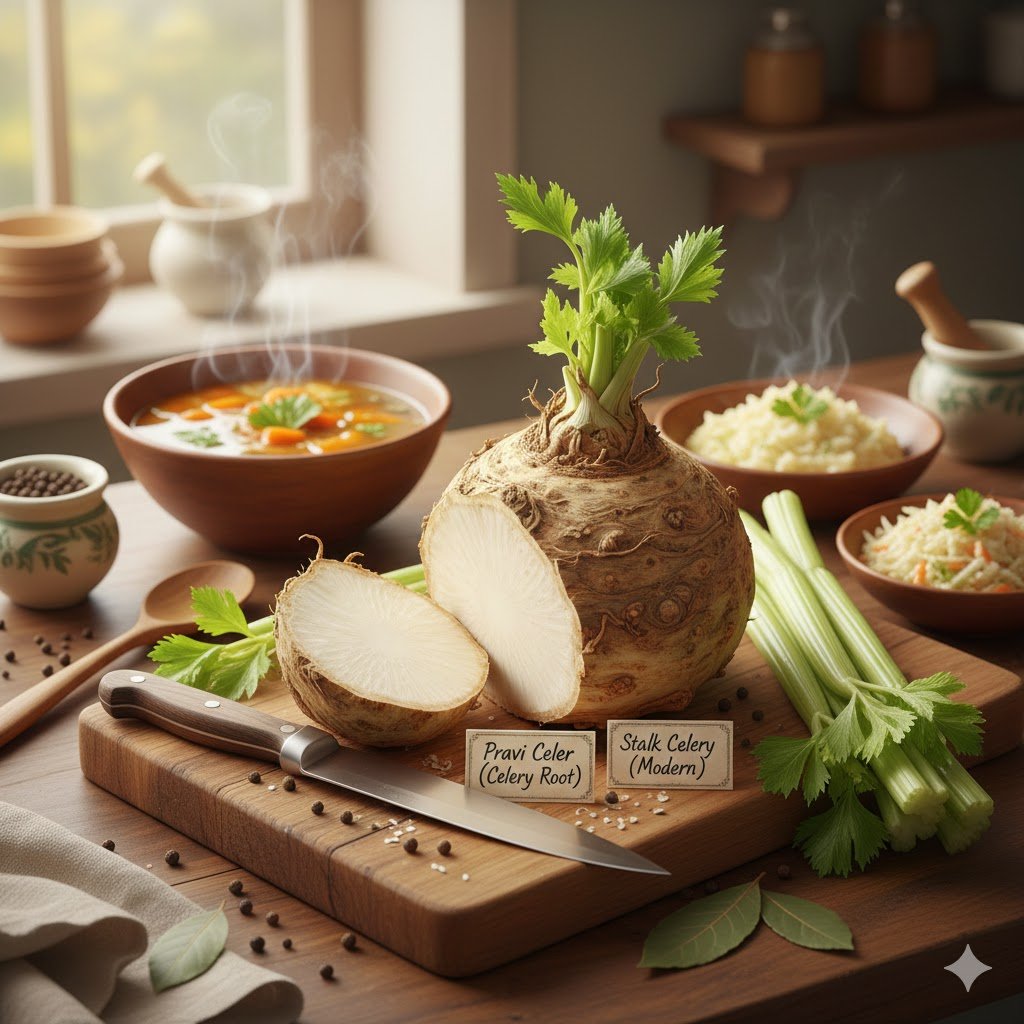
- Stalk celery (long, green sticks)
Others mean: - Celery root (celeriac)
When people say it, they usually mean celery root, not the stalks.
And that distinction changes everything—from taste to nutrition to how it’s used.
Supermarkets Didn’t Help
Modern grocery stores pushed stalk celery because:
- It looks cleaner
- It stores easily
- It fits Western salad culture
But traditional kitchens never relied on it. They relied on root-based celery, dense and powerful.
That’s where the idea of it comes from—the original, functional version.
What Makes Pravi Celer “Real”?
Strong Aroma Is a Feature, Not a Flaw
One thing people complain about is the smell.
And honestly? That’s how you know it’s good.
it has:
- Sharp, earthy aroma
- Bitter-slightly-sweet depth
- Long-lasting flavor in cooking
If it smells weak, it usually is weak.
It Grows for Purpose, Not Appearance
Unlike stalk celery bred for crunch and looks,
- Grows underground
- Stores nutrients in the root
- Is meant for cooking, soups, and healing broths
It’s not decorative food. It’s functional food.
Nutritional Value of Pravi Celer (Why Old Generations Trusted It)
What’s Actually Inside It
From my own research and experience, it stands out because it delivers nutrients in concentration, not dilution.
Key nutrients include:
- Dietary fiber (digestion support)
- Potassium (fluid balance)
- Vitamin K (bone health)
- Antioxidants (inflammation support)
It’s not a miracle cure. But it’s consistent. Reliable.
Why It Was Used in Home Remedies
Traditionally, it was used for:
- Digestive discomfort
- Water retention
- Post-illness recovery meals
Not because of trends—but because it worked slowly and steadily.
Pravi Celer vs Modern Celery: A Real Comparison
| Feature | Pravi Celer (Celery Root) | Stalk Celery |
|---|---|---|
| Primary Use | Cooking, soups, remedies | Raw snacks, salads |
| Flavor | Strong, earthy, deep | Mild, watery |
| Nutrient Density | High | Moderate |
| Shelf Life | Long | Short |
| Cultural Value | Traditional | Commercial |
This table alone explains why people argue about it.
Pros and Cons of Using Pravi Celer
Advantages
- Deepens flavor in dishes
- More filling and satisfying
- Versatile for cooking
- Stores well without losing quality
Limitations
- Needs peeling and prep
- Strong taste may surprise beginners
- Less “snack-friendly”
Still, I’d argue the pros outweigh the cons—especially if you care about food that does something.
How to Use Pravi Celer Correctly (Practical Guide)
How to Prepare and Use Pravi Celer Step by Step
Step 1: Choosing the Right Root
Look for:
- Firm texture
- Heavy weight
- Clean, earthy smell
Avoid:
- Soft spots
- Mold near the base
Step 2: Cleaning and Peeling
it has a rough skin. That’s normal.
Steps:
- Rinse thoroughly
- Cut off outer layer with a knife
- Keep submerged in water to prevent browning
Step 3: Cooking Methods That Work Best
Best ways to use it:
- Soup base (with carrots and onion)
- Mashed as a potato alternative
- Slow-cooked stews
- Broth for recovery meals
I personally avoid eating it raw until someone gets used to the taste.
Step 4: Storage Tips
- Wrap in paper
- Store in a cool place
- Avoid plastic when possible
It lasts weeks if stored properly.
Common Myths About Pravi Celer
“It’s Too Strong to Be Healthy”
Strong doesn’t mean harmful.
It usually means less diluted.
“Stalk Celery Is the Same Thing”
Nutritionally and culturally—it isn’t.
“Only Old People Use It”
Funny thing is, many modern chefs are rediscovering it now.
When Not to Use Pravi Celer
Let’s be fair. There are moments when it’s not ideal.
Avoid it if:
- You need quick raw snacks
- You dislike earthy flavors completely
- You’re cooking very light, neutral dishes
It’s not meant to disappear into food. It’s meant to contribute.
FAQs About Pravi Celer
Below are common questions people ask when they finally decide to understand it properly.
What is pravi celer used for most commonly?
it is mainly used in soups, broths, stews, and traditional cooked meals where deep flavor is needed.
Is pravi celer the same as celery root?
Yes. In most regions, it refers to celery root rather than stalk celery.
Can pravi celer be eaten raw?
It can, but its strong taste makes it better suited for cooking, especially for beginners.
Is pravi celer healthier than stalk celery?
In terms of nutrient density and fiber, it generally offers more concentrated benefits.
How does pravi celer affect digestion?
Thanks to its fiber and natural compounds, it supports digestion when consumed cooked.
Can I substitute stalk celery for pravi celer?
You can, but the flavor and depth will not be the same. It’s a compromise, not a replacement.
Final Thoughts on Pravi Celer
it isn’t trendy. It isn’t flashy. And it doesn’t try to impress anyone.
That’s exactly why it works.
In a time when food is bred to look good rather than be good, it stands quietly in the corner, doing what it has always done—feeding people properly.
Conclusion
it isn’t trendy. It isn’t flashy. And it doesn’t try to impress anyone. That’s exactly why it works. In a time when food is bred to look good rather than be good, this root stands quietly in the corner, doing what it has always done—feeding people properly.
